Understanding Yourself With the McInnis Method
A practical introduction to organization, adaptation, capacity, curiosity, and action.
Understand yourself with the Method →You may already understand the problem.
You recognize the anger, anxiety, shutdown, obsessive thinking, or relationship pattern. You may even know where it came from. Then the moment happens again, and you do the same thing.
Dennard McInnis is a Licensed Clinical Social Worker providing individual psychotherapy in Austin through McInnis Mental Health. His approach, the McInnis Method, is for people who want to understand why a pattern developed without treating that explanation as the end of the work.
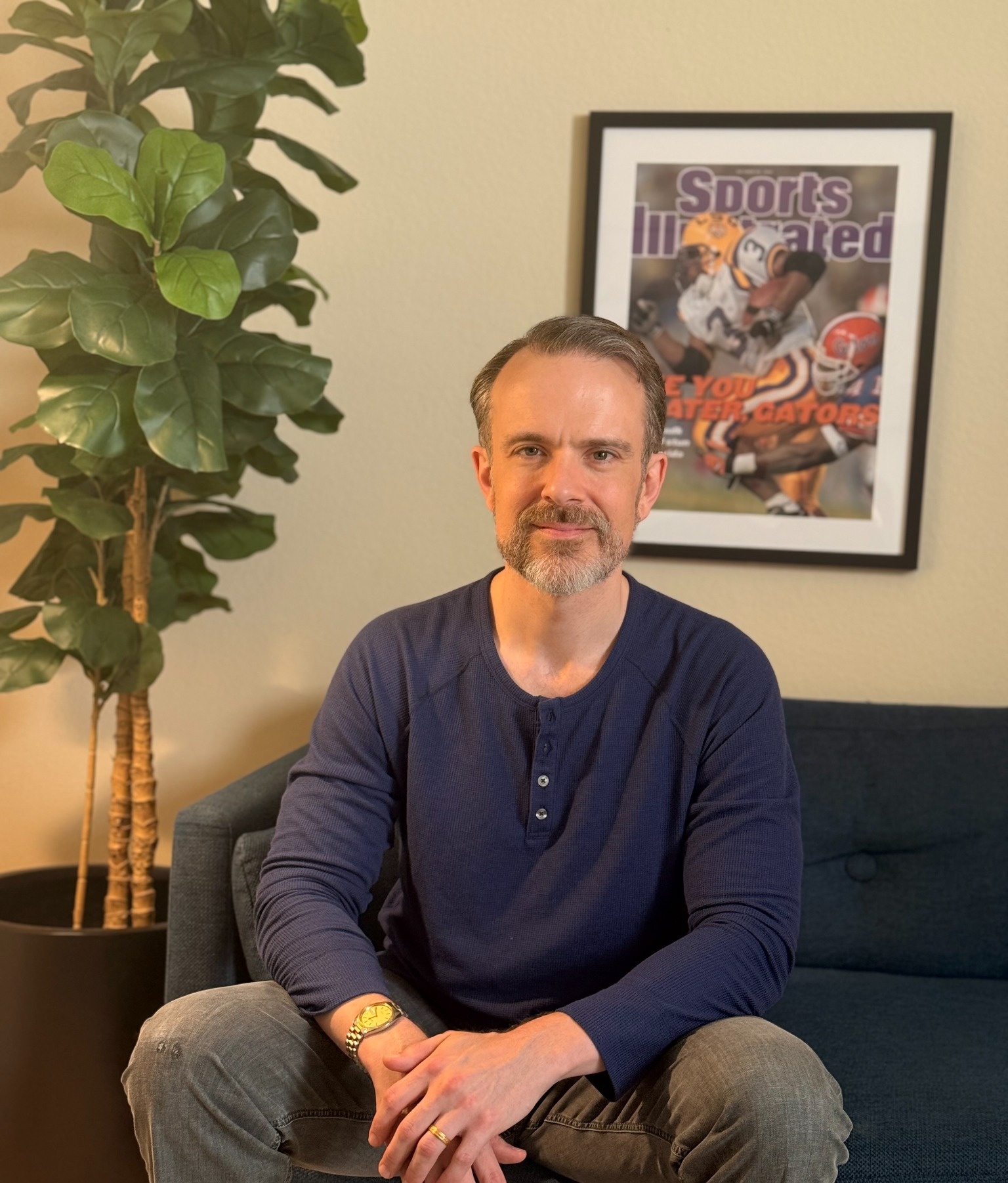
The details differ, but some experiences may be familiar:
Relationship problems are addressed within individual psychotherapy, with the work focused on your experience, your patterns, your decisions, and what remains within your control.
You do not need a diagnosis or a polished account of what is happening. It is enough to recognize that your current way of handling something is costing you more than it used to.
Most of what looks like the problem started as a solution.
You may have learned to stay quiet because honesty once carried a real cost. You may have become highly capable of anticipating other people because not anticipating them used to be dangerous. You may withdraw, overexplain, work harder, take responsibility for everyone, or stop needing anything because those responses once solved an actual problem.
That history matters. But understanding why a pattern developed does not determine whether its current cost should continue to be accepted.
A response can be intelligent in origin and costly in its present use. Insight can explain the old rule. It does not automatically change what happens when the rule is activated again.
The McInnis Method begins by asking how your current response came to make sense. That does not mean every response is healthy or harmless. It means behavior becomes easier to examine when it is treated as organized rather than random.
In client-facing terms, the work may move through six connected questions:
What is actually happening, and what actually happened?
What did you learn to expect or organize around avoiding?
What do you do when that threat appears?
What does the response make possible—and what is it costing you now?
What ability may still be available somewhere the pattern does not believe it is dangerous?
What real, appropriate step could let present reality provide new information?
This is not a rigid checklist. It is a way of keeping therapy connected to how the pattern formed, what it accomplishes, and what may need to happen outside the room.
Explore the McInnis Method →Your history may explain how you became capable of shutting down, lashing out, abandoning your position, or staying in a situation that repeatedly harms you.
That explanation matters. Change based on contempt usually creates more protection. But explanation does not transfer ownership of what happens now.
Therapy can hold both realities:
Responsibility is not merely blame in more respectable language. It identifies what is actually yours to observe, decide, and do next. That is how agency begins to return.
Dennard's style is active, curious, and direct. He observes before interpreting and treats his own conclusions as open to examination.
Sessions may slow down around one specific moment:
What happened before you shut down? What did you notice? What did you assume the other person meant? What felt dangerous about answering directly? What did you do next?
Specificity helps separate what happened from what the pattern predicted was happening.
Therapy should preserve uncertainty when uncertainty is warranted, but should not keep reopening conclusions reality has already earned. Sometimes more information is needed. Sometimes the available information is clear and the harder task is deciding what you will do with it.
Pattern does not automatically equal problem. Problem does not automatically equal target. The work is to determine what is actually organizing the difficulty before deciding what should change.
Read what to expect in McInnis Method therapy →You do not need to be ready for every conversation before therapy begins. Some willingness to become more specific about what is happening is enough to start.
You may want a different style of therapy if you are primarily looking for unstructured space to talk, direct advice without much examination of the pattern, or a process focused mainly on insight rather than action.
That is not a judgment about either approach. Different people need different kinds of help at different times.
Dennard may also determine during consultation that another provider or service is better suited to what you need. Fit should be evaluated, not marketed into existence.
Dennard works primarily with men, young adults, and older teenage boys age 17 and older.
For one person, therapy may involve work, marriage, fatherhood, anger, isolation, or burnout. For another, it may involve independence, identity, family conflict, shame, relationships, or emotional withdrawal.
The aim is not to impose one account of masculinity. It is to understand the person in front of us: what he learned, what he protects, what the protection costs, and what capacities may still be available under different conditions.
Dennard provides in-person individual psychotherapy in Austin.
Telehealth is available to clients located in Texas, Arizona, Florida, and Nevada. Availability and fit can be discussed during the initial consultation.
About Dennard McInnis, LCSW →You do not need to understand the entire McInnis Method before scheduling. If you want a clearer sense of the approach first, these are useful places to begin:
A practical introduction to organization, adaptation, capacity, curiosity, and action.
Understand yourself with the Method →Why sessions may slow down, become specific, widen the frame, and eventually return to action.
See what therapy is like →Why insight can stall and why a real action may give an old pattern new information.
Read the reference sheet →The free 15-minute consultation is a chance to describe what brings you in, ask questions, and get a sense of how Dennard works.
If the approach seems useful, you can discuss what comes next. If it does not, that is useful to know too.
Schedule a free consultationIn-person therapy in Austin
Telehealth in Texas, Arizona, Florida, and Nevada